Will Lifting Weights Make Me Bulky? What Women in Perimenopause Actually Need to Know
Worried lifting will make you bulky? Here's how muscle really responds to training, and why strength work matters more than ever in perimenopause.
Published November 18, 2026 · 4 min read · 10 sources
If you've avoided lifting weights because you're afraid of getting "bulky," you're not alone. But here's the good news: strength training doesn't automatically lead to large muscles.
Building noticeable muscle takes time, consistent training, and adequate nutrition. Genetics, hormones, and your training program also influence the results.
What Happens When You Start Lifting?
In the first few weeks, you may notice exercises feel easier and your movements become more controlled.
That's partly because your nervous system gets better at activating your muscles. Muscle growth can begin early, but visible changes usually take longer.
Why Strength Training Matters During Perimenopause
As estrogen fluctuates and eventually declines, women may experience changes in muscle mass, strength, and recovery.
Resistance training helps preserve muscle, supports bone health, and improves everyday function.
And you don't need to spend hours in the gym to benefit!
Want this built around your week?
Work with GabbyHow to Get Started
-
Strength train 2–3 times per week. Focus on major muscle groups.
-
Choose functional exercises. Squats, rows, presses, and deadlift variations strengthen muscles you use every day.
-
Progress gradually. Increase resistance or difficulty as you get stronger.
-
Prioritize recovery. Sleep, nutrition, and rest are important parts of building strength.
The Bottom Line
Lifting weights won't automatically make you bulky, but it can help you become stronger, healthier, and more capable.
During perimenopause, maintaining muscle and strength is an important part of supporting long-term health and independence.
Don't let the fear of getting bulky keep you from experiencing the benefits of strength training!
This article is for educational purposes only and does not replace medical advice. Consult your physician if you have health concerns before starting a new exercise program.
Your next step
Training built for your body, this season of it
A personalized program from a coach who understands perimenopause and menopause. Tell us about you and we'll take it from there.
Frequently asked questions
Will lifting weights make me bulky?
Standard strength training does not automatically make women bulky. Muscle gain is gradual and influenced by genetics, nutrition, hormones, and training volume. Most women find that lifting builds strength, capability, and metabolic health rather than dramatic size.
How often should I lift to see benefits?
For most people, training major muscle groups 2–3 times per week is an effective way to spread out training volume and support recovery. Strength training at that frequency can also help women over 40 slow age-related muscle loss and maintain strength and independence.
Why does strength training matter during perimenopause?
As estrogen declines, you may notice changes in muscle mass, strength, and recovery. Resistance training becomes especially important for supporting muscle mass, strength, and physical function during this time, along with adequate protein and good recovery.
References
Every claim above traces to a reviewed source in Gabby's research library.
- Strength training helps women build strength, muscle tone, and metabolic health. Because muscle gain is gradual and influenced by genetics, nutrition, hormones, and training volume, standard strength training does not automatically make women "bulky." — NASM Women's Fitness Specialization curriculum
- In the early weeks of a new strength program, many strength gains come from neural adaptations — improved coordination, motor control, and muscle recruitment. Visible muscle changes usually take longer and become more noticeable with consistent training, adequate nutrition, and progressive overload. — NASM Essentials of Personal Fitness Training
- Progressive overload — gradually increasing resistance, repetitions, volume, or exercise difficulty over time — is a fundamental principle for building strength across adulthood. It should be applied gradually and adjusted to the individual’s age, experience, recovery, and health status. — NASM WFS Chapter: Resistance Training for Women
- For most people, training major muscle groups 2–3 times per week can be an effective way to distribute weekly training volume, support recovery, and promote strength and muscle adaptation — ACSM Position Stand: Progression Models in Resistance Training
- Compound movements like squats, deadlift variations, and rows can provide strong functional benefits for women over 35 because they build strength across multiple joints and muscle groups used in everyday movement. — NASM WFS Chapter: Integrated Program Design
- Women can benefit from appropriately challenging resistance training when exercises are progressed safely and matched to their current capacity. For adaptation, relative intensity — how hard the effort is for the individual — is often more useful than focusing only on the absolute amount of weight lifted. — NASM Essentials of Personal Fitness Training (7e)
- Age-related muscle loss can begin as early as the 30s and tends to accelerate later in life, especially after about age 60. Resistance training is one of the most effective strategies for preserving muscle mass, strength, and physical function with age. — ACSM Position Stand on Exercise and Older Adults
- As estrogen declines during menopause, women may experience changes in muscle mass, strength, inflammation, and recovery. Resistance training, adequate protein, and recovery-aware programming become especially important. — Maltais ML et al., J Endocrinol, 2009
- As estrogen declines during menopause, resistance training becomes especially important for supporting muscle mass, strength, and physical function. — NASM WFS Chapter: Resistance Training for Women
- Strength training 2–3 times per week can help women over 40 slow age-related muscle loss and maintain strength, function, and independence. — ACSM Guidelines for Exercise Testing and Prescription
Written & reviewed by
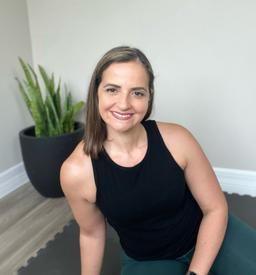
Gabby
NASM-Certified Personal Trainer with 15+ years of experience, currently completing the advanced NASM Women's Fitness Specialization. Every article here is grounded in her coaching experience and traceable, sourced research — never generic advice.
About Gabby